Language·APR 22, 2026·1 min read
What Japanese Taught Me About Clarity
Language shapes how we think. Japanese showed me the beauty of precision.
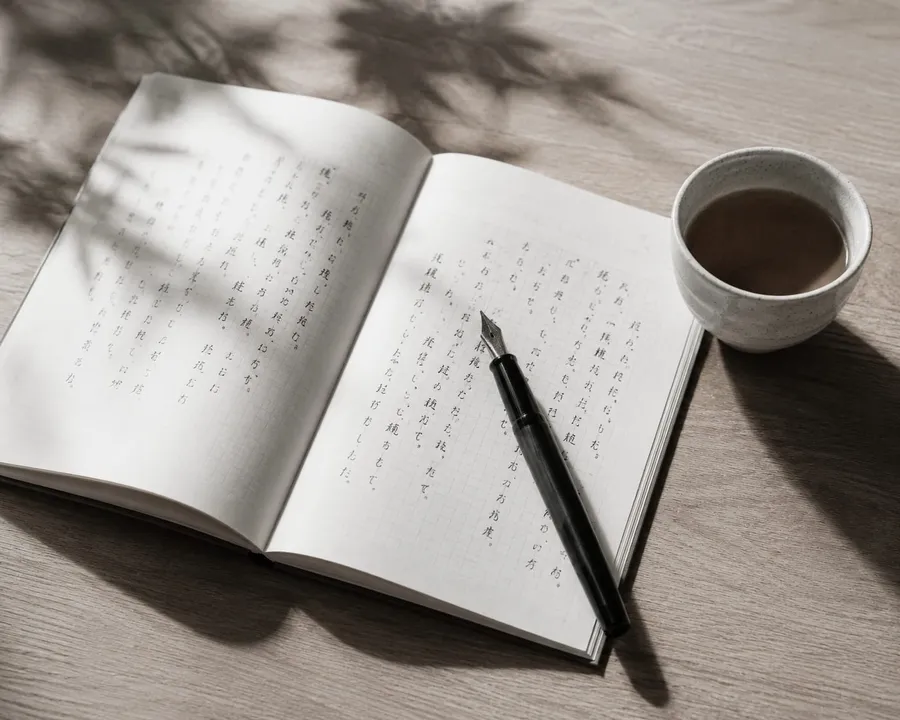
I’ve spent years between three languages — Polish, English, and Japanese. Each one carves thought differently. But Japanese, more than the others, changed how I think about clarity itself.
Context does the heavy lifting
Japanese routinely omits what English insists on spelling out. Subjects vanish. Objects vanish. A complete, natural sentence can be a single verb.
This isn’t vagueness. It’s a contract: the speaker trusts the listener to hold the context, and the listener trusts the speaker to say only what the context can’t supply.
Clarity isn’t saying everything. It’s saying exactly what’s missing.
Precision lives in unexpected places
Where English has “wear,” Japanese splits by body zone — 着る for the torso, 履く for the legs and feet, かぶる for the head. Where English says “I,” Japanese offers a shelf of options, each one a statement about who you are relative to your listener.
The lesson: languages spend their precision budgets in different places. What one grammar ignores, another finds essential. There is no neutral way to describe the world.
What this does to writing
Working between languages made me a more suspicious writer. Every sentence now gets the question: what work is this actually doing? Is this word here because the reader needs it, or because the grammar of my habit demanded it?
Most first drafts, in any language, are full of words performing no function except momentum.
The transferable skill
You don’t need Japanese to apply this. The discipline is: identify what your reader already holds, say only what they’re missing, and spend your precision where it changes the outcome.
That’s clarity. Every language teaches it differently, and every language lets you ignore it.